Mushroom coffee: What’s the deal with fungi fuel?

updated on Aug 1, 2026
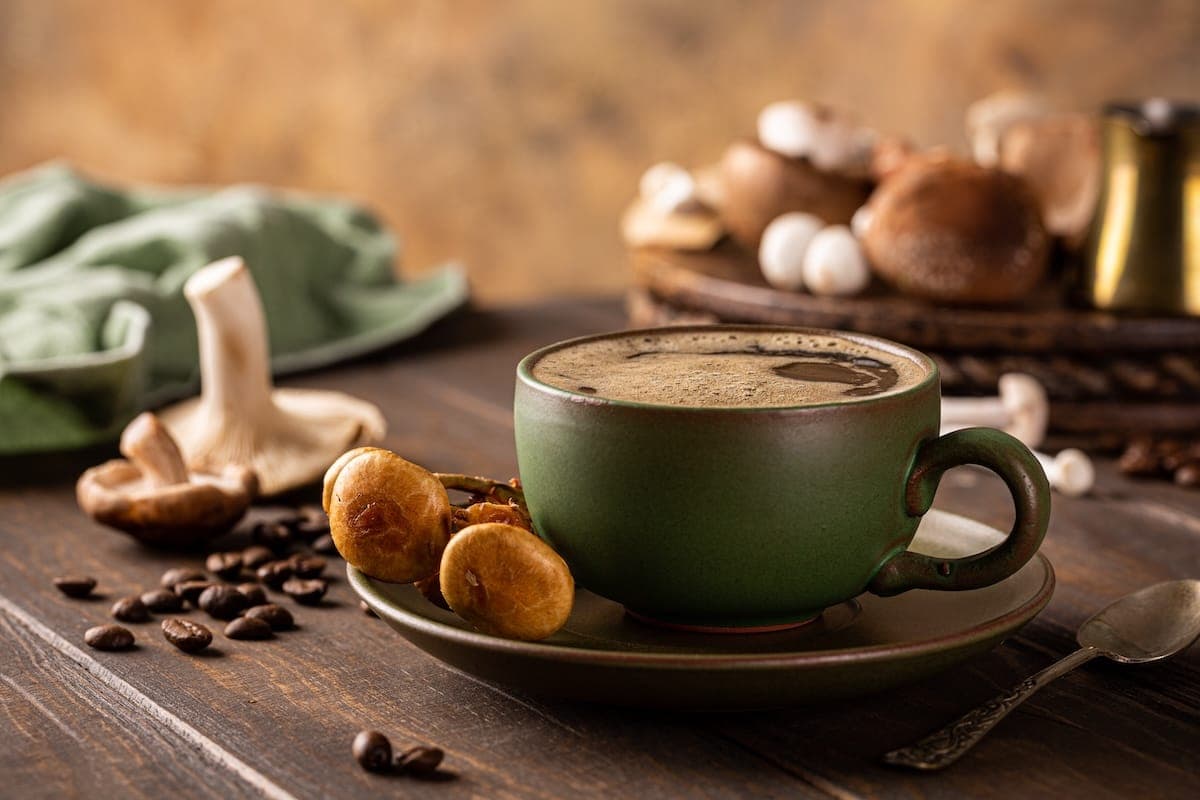
You might have seen mushroom coffee cropping up on menus or your social media feeds, but what are the actual benefits, and is this trend worth the hype?
Mushrooms and coffee. Different ingredients, used for different things – until now. Doing what it says on the tin, mushroom coffee blends coffee grounds with extracts from ‘functional mushrooms’ (mushrooms with medicinal qualities, such as lion’s mane and chaga), to create a brew that offers more than just an energy boost. And it’s a wellness trend that has exploded in popularity in recent years, with Precedence Research estimating the market size at $3.23 billion in 2025, predicted to hit $5.56 billion by 2035.
Blended together before it’s brewed, mushroom coffee is a smooth drink with a subtle, nutty, earthy flavour that you may not immediately notice. The trend is driven by a range of heralded benefits. For one thing, it can help to reduce the amount of caffeine in a regular cup of coffee – a handy perk for those who struggle with the effects. But other benefits often shared include enhanced focus, reduced anxiety, stress relief, energy boosts, and improved gut health.
Nutritional therapist Claire Barnes points to some emerging evidence that individual functional mushrooms may support areas such as cognitive function, stress response, immune signalling, antioxidant activity, and sleep. “Lion’s mane has attracted particular interest for cognitive support, while cordyceps has been studied in relation to exercise performance and oxygen use. Reishi is often associated with relaxation, immune modulation and sleep support, although the human evidence is still limited and should not be overstated.”
Though it’s currently having ‘a moment’, the idea of blending functional mushrooms with coffee isn’t entirely new, and using mushrooms medicinally has roots that go a long way back, particularly in Chinese medicine. Considering why interest is peaking now, Claire has a theory.
“I think mushroom coffee has become popular because it speaks directly to how many people are feeling not just stressed, but also switched on and tired, but still needing to perform. A lot of people rely on coffee to push through the day, but they’re also becoming more aware that too much caffeine can lead to jitters, anxiety, energy crashes, and sleep disruption.
“It also fits into the wider trend for functional foods and drinks. People increasingly want products that do more than just taste good; they want them to support focus, mood, stress resilience, immunity, or energy. Coffee is already a daily habit for many people, so adding functional mushrooms makes it feel like an easy upgrade rather than another supplement to remember.”
She also points to smart marketing. Mushroom coffee brands are often wrapped up in sleek packaging with celebrity and influencer endorsements, which Claire suggests has helped take an idea that was previously quite niche and turn it into something that feels modern, aspirational, and accessible.
The question of whether the claims that you will see on products stand up is an important one, with a fairly clear answer. “I’d be wary of any direct health claim being made for functional mushrooms in food or drink products. In the UK, health claims need to be authorised on the Great Britain Nutrition and Health Claims Register, and as far as I’m aware, there are currently no authorised health claims specifically for functional mushrooms such as lion’s mane, reishi, chaga, or cordyceps.”

Claire also highlights that brands may be able to authorise health claims about their mushroom coffee because they’ve added in other nutrients, such as magnesium, vitamin B12, vitamin C, zinc, or iron. The claims then relate to those added vitamins or minerals, not the mushroom coffee. Additionally, she calls for caution regarding hard claims that mushroom coffee can help to ‘balance hormones’, support weight loss, treat ADHD, or prevent health conditions.
“Nevertheless, that doesn’t mean these mushrooms lack health benefits. But evidence is still limited, and most studies use specific mushroom preparations at specific doses, not the mushroom coffee blends we see on the shelves.”
The bottom line is, mushroom coffee is a safe alternative to traditional coffee – and could be particularly beneficial for someone who struggles with the effects of caffeine. But that’s generally where the current evidence-based benefits end. So, enjoy it for its flavour, its reduced caffeine, and for its experimental blend – but take big claims and broad promises with a pinch of salt.



Find a professional today
Try our guided search tool, we can connect you with over 20,000 professionals.