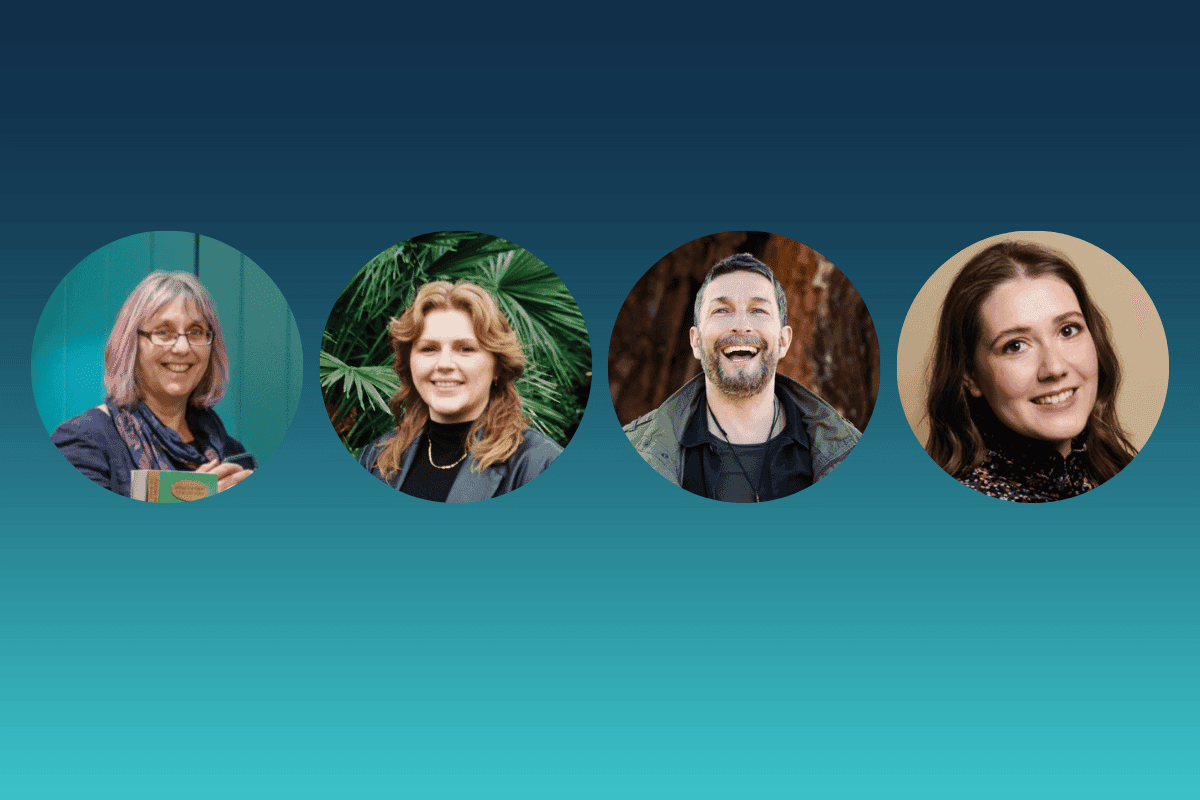
Meet Happiful Poetry Prize 2026 runner-up Laurie Donaldson

updated on Jul 28, 2026
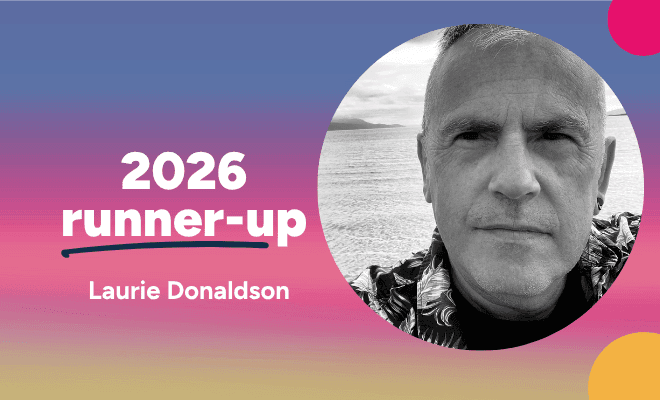
Runner-up Laurie Donaldson's poem, Not a Fidget, explores life with tics through honesty, humour, and careful observation.
Here, he shares how poetry became part of his recovery from depression, why editing is just as important as inspiration, and the advice he'd give anyone starting to write.
Feeling inspired? Learn more about the 2027 Poetry Prize which opens on 1 September, 2026.
How long have you been writing poetry?
Like many people, I wrote some pretentious break-up poetry in my student days, then dipped in and out of writing over the years without really applying myself to it.
Just after Covid, I saw a call-out for a local anthology of new writing. I wrote a short poem, which was accepted, and there was a reading outside a library.
I'd never read my work in public before because I tend to get anxious, but I really enjoyed the experience. I was hooked.
What does your writing life actually look like day to day?
I'm a freelance editor and writer, which means I spend much of the day at my computer.
I don't have a routine for writing poetry. I snatch time here and there whenever I can.
That's one of the reasons I love writing workshops, both attending them and running them. They create dedicated time for writing, often with prompts and exercises to get ideas flowing.
I also carry scraps of paper and a notebook with me wherever I go, and keep annoying my drafts until I'm finally happy with them.
Do you consider yourself a poet first, or is poetry something you fit around other responsibilities?
I call myself a poet on Instagram as a way of separating my personal life from my poetry work and events.
It feels like a separate side of myself, but one that I really enjoy and that helps me feel creative.
Can you tell us about the process of writing your winning poem?
I consider myself to have undiagnosed, lifelong, mild Tourette syndrome.
I've had tics since I was wee and always thought they were simply part of who I was. It was only later in life, after doing some research, that I realised what the condition might be.

That same research showed how difficult it can be to get a formal diagnosis, so I've never pursued one.
The poem was my attempt to write about something I'd barely discussed with anyone apart from my wife, and I found the experience surprisingly cathartic.
I already had a much longer draft sitting on my computer. When I saw the Happiful Poetry Prize, I cut it by half and rewrote it in couplets, which made it much more focused.
Did you experience any imposter syndrome around your poetry? What helped you submit it to the competition?
Not really. When I started taking poetry seriously, I realised I needed to treat it as a practice rather than simply tinkering with poems.
That meant reading about poetic forms, reading other poets, attending workshops and joining my local writers' club.
Doing those things gave me the confidence to submit my work regularly and actively seek out opportunities.
What mistake do you see new poets making too often?
I think many people treat poetry as purely confessional, which can make a poem deeply personal but not always interesting for someone else to read.
It's important to move beyond simply listing feelings or experiences and shape them into something readers can connect with.
I also think people often stop editing too soon.
Reading work aloud at an open mic, or asking poets whose work you admire for feedback, can make a huge difference.
What role does poetry play in your wellbeing?
Poetry is hugely important to my wellbeing and my sense of self.
A few years ago, I experienced depression that was brought on by isolation while my wife and I were living in a forest. We eventually moved into a town, which helped.
During that difficult period, I'd stopped doing two things I'd always loved: reading books and writing creatively.
As I started to feel better, poetry became both an outlet and a form of expression.
Today, I'm a passionate advocate for creative writing and wellbeing. I genuinely believe it can help anyone feel more grounded, develop self-worth and gain perspective.
Has writing helped you understand yourself differently?
Absolutely.
I'd spent 20 years working in publishing in London, but it often felt like just a job rather than something I was passionate about.
Now I feel part of a creative community, and I want to share that with other people.
Alongside attending workshops, I now run many of my own because I think spending time in a room full of creative people, all focused on writing, helps us temporarily block out life's worries and understand ourselves a little better.
What are a few tips you would give to someone getting started with writing poetry?
- Treat poetry like any other craft. It takes practice and study.
- Read as much poetry as you can. Let it enter your bloodstream.
- Immerse yourself in the poetry community. Attend workshops, join a writers' group and go to open mics.
- Keep writing. Try free writing, experiment with unusual forms and genres, and discover what works for you.
- Let your writing shape your practice. The more you write, the more you'll discover your own voice.



Find a professional today
Try our guided search tool, we can connect you with over 20,000 professionals.