Gemma Correll on how anxiety inspires her creative process

updated on Jul 13, 2026
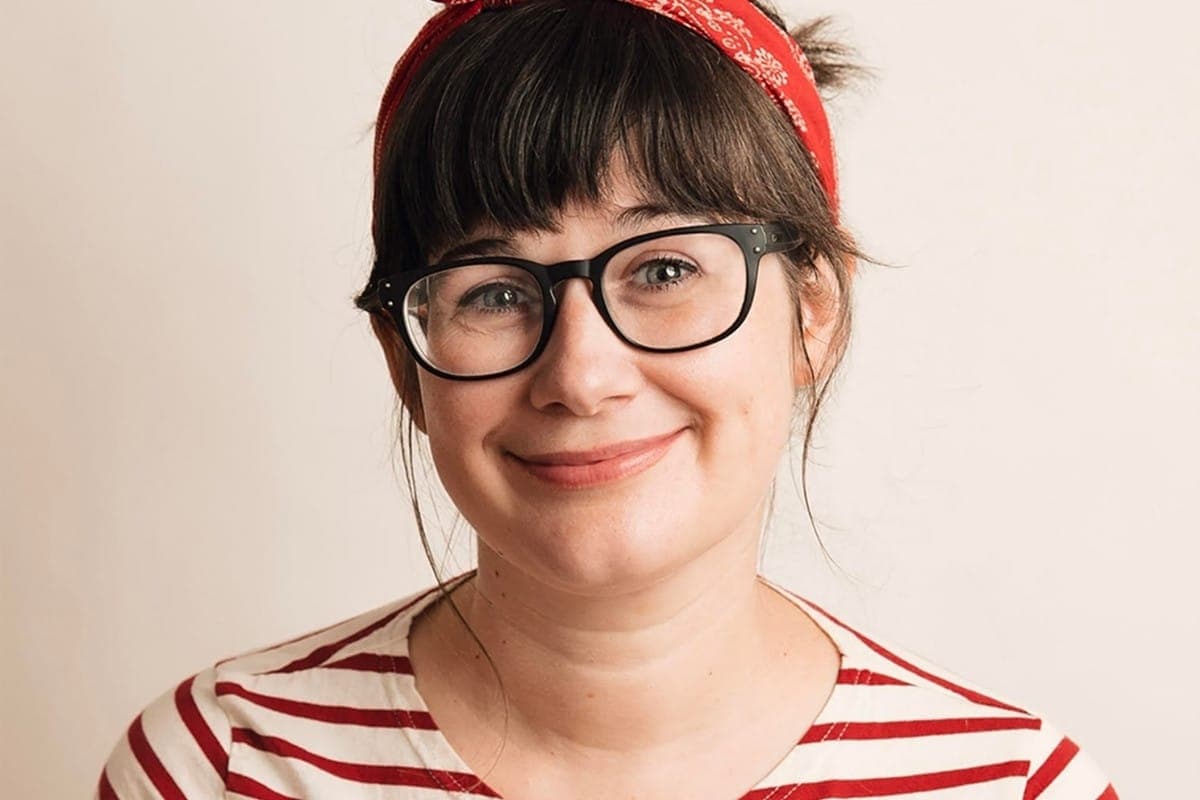
She’s the award-winning, viral cartoonist, known for her simple yet powerful artwork that captures the everyday experience of anxiety. Here, we chat with Gemma Correll about where it all began and the power of humour when it comes to talking about mental health
Hello Gemma! Could you tell us about your early memories of drawing?
My earliest memories of drawing are my Granny giving me the cards from inside her tights packaging to scribble on. I was always coming up with stories and ideas for comics, and I loved reading books and cartoon collections like the Giles Annuals (my parents collected them) and The Far Side. I even started making my own comic at primary school – my teacher very kindly allowed me to photocopy it in the school office. I filled it with cartoons and puzzles like the ones I’d seen in The Beano, and I even sellotaped a free penny sweet to the front cover. I sold the comic, which I called The Chatterbox, for 20p – mostly to my family members, but I also managed to persuade a few school friends into parting with some of their biscuit money!
What made you decide to start sharing your drawings online?
I graduated from art school around the time that social media was becoming a ‘Big Thing’. I used Flickr and Tumblr, and later Instagram and Facebook, to share drawings that I had done for clients. I started working part-time as an illustrator straight after art school (while also working in other jobs, such as being a teaching assistant), and I decided to share a couple of more personal drawings too, to mix it up a bit. I noticed that those drawings seemed to resonate with people more than my commercial work.
When did you begin to explore mental health in your work?
I suppose I always explored mental health in my work indirectly, in that I used drawing as a way to get my thoughts and feelings out of my head and onto paper. But I started drawing images that were directly inspired by my own experiences with mental health about 15 years ago.
I had recently graduated from college and was doing a lot of personal work along with commissioned illustrations (I still try to allow myself as much time for personal work as possible). I was struggling with anxiety around work and travel, in particular, and I was still struggling with quite intense agoraphobia around that time.
I drew short comics in my sketchbook (more generally about anxiety, rather than specifically about my phobias) and shared them online alongside other cartoons, not really expecting much of a response. To my surprise, the drawings about mental health seemed to resonate with a lot of people, which encouraged me to make more.
Talking about mental health has become more accepted, but have you ever faced any challenges around it?
Mental illness is very individual – no two people’s experiences are the same. I have found that some folks on social media have difficulty with this fact. I think it’s because, with so much content that is algorithmically designed to align with an individual’s worldview and be ‘relatable’, anything that doesn’t centre their exact experience is dismissed as untrue. I’ve received some angry responses to comics that were created from my personal, lived experience. I also receive quite a lot of unsolicited advice. I know that people mean well, but... I’ve obviously already tried yoga!
Are there any visual motifs that you find work particularly well when trying to capture the experience of anxiety?
I’ve always been drawn to opaque, explosive star shapes that contrast with my simple line drawings. I like the graphic, bold look of these bursts, and they help me depict the different stages of anxiety. I call the smaller little starbursts ‘sparks’. They represent the small sparks of anxiety that are all too easy to catch and ignite into something bigger and more destructive.
You often use humour as part of your work. Why do you think this resonates with people?
It can be a case of ‘If I don’t laugh, I will cry’, but also, finding humour in a situation allows you to take a step back and look at things from a different angle, maybe gaining a little more clarity in the process. Laughter is also a great tension reducer, and I think that anyone who lives with anxiety could do with a little bit of stress relief.
What would you like readers who struggle with anxiety themselves to take from Anxietyland?
I would like readers to leave Anxietyland with a sense of hope. Anxiety may not be curable in the sense of being able to get rid of it entirely, but it is very treatable. It is something that you can learn to live with.
One word to describe your creative process?
Untidy.
What’s on your desk while you are working?
Coffee and a lot of dog hair.
What time of day are you most productive at?
Mid-morning, after coffee and before lunch.
Music, podcasts, or silence when you’re working?
If I’m coming up with ideas, silence, with the soft sound of pugs snoring in the background. If I’m doing something like drawing finished linework or colouring, I like to listen to music or a podcast (I love Off Menu.)
A piece of work that means the most to you?
One of the first pieces of artwork that I shared online was ‘Nope’. It’s a drawing of myself, lying down on the floor. It took five minutes to draw and is very simple, but it seems to speak to a lot of people, and is an accurate description of how I feel a lot of the time... And yet, I persist!

Header image courtesy of Tiny Deer Studio



Find a professional today
Try our guided search tool, we can connect you with over 20,000 professionals.