Eco-friendly tips to reduce your noise pollution

updated on Jun 26, 2026

What’s the impact of noise pollution on the environment, and on our wellbeing?
Traffic rushing by. Aircraft overhead. Construction sites. Roadworks. Generators. Washing machines. Lawn mowers. Televisions. Do you ever find yourself wishing you could put the world on ‘mute’ for a minute?
Noise pollution is a two-pronged threat, impacting the health and wellbeing of humans, as well as animals and the environment, and it’s a growing problem in the UK. Noise is one of the largest sources of complaints to local authorities, with more than 80% of people reporting noise exposure in their homes – that’s according to Chartered Institute of Environmental Health survey data. It has been linked to serious physical and mental health conditions, and those who live in areas affected by noise pollution are often negatively impacted. Environmentally speaking, noise pollution also has a vast negative effect. In findings published in the journal Frontiers in Ecology and Evolution, chronic noise was linked to changes in species behaviour and physiology, leading to effects across food chains as well as altered ecosystem interactions.
“Noise pollution is more than just an annoyance; it’s a serious public health issue that’s often overlooked because sound is invisible,” says Poppy Szkiler, CEO and founder of Quiet Mark – an independent global certification programme associated with the UK Noise Abatement Society, founded by Poppy’s grandfather, John Connell OBE, in 1959.
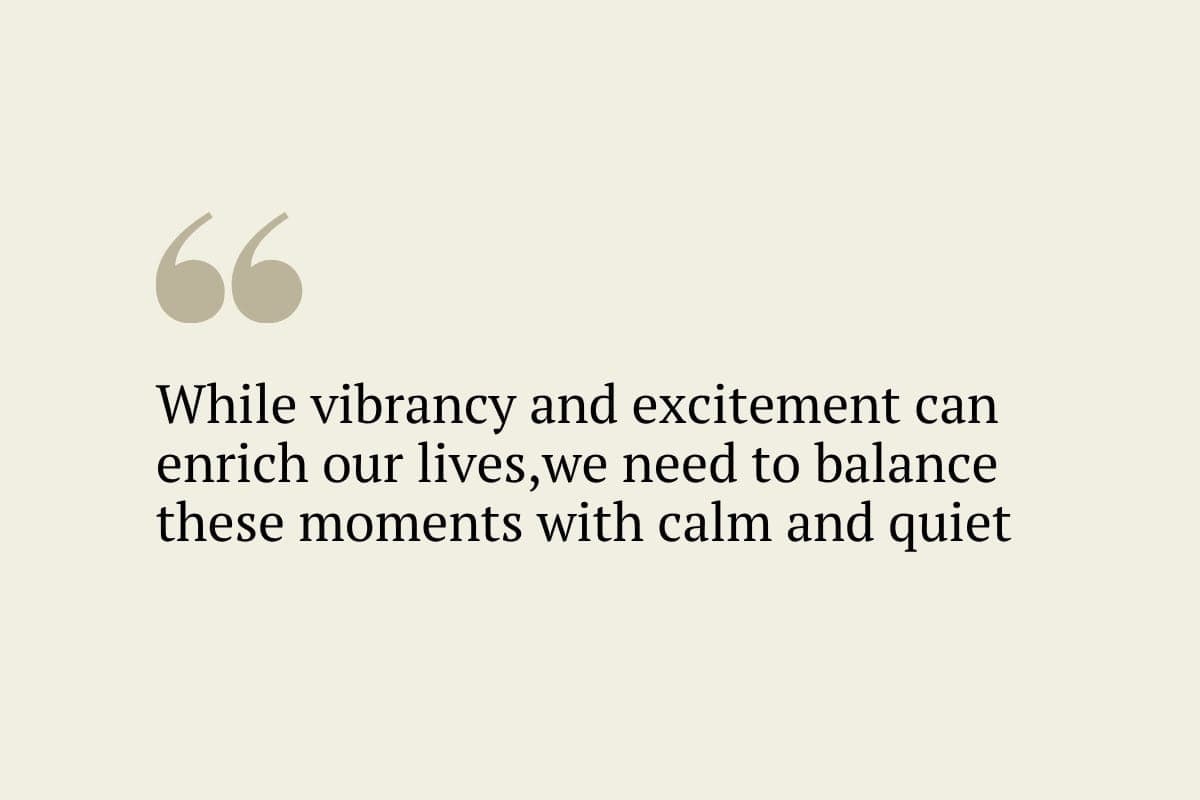
“The World Health Organization ranks noise pollution as the world’s second largest killer pollutant, with research showing that excessive noise can trigger stress, anxiety, depression, high blood pressure, and even cardiovascular problems,” Poppy continues. “While vibrancy and excitement can enrich our everyday lives, we need to balance these moments out with the alternatives of calm, quiet, and the chance to switch off every once in a while if we want to preserve our mental and physical wellbeing – especially in a world that continues to grow louder day by day.”
A bit of peace and quiet
It goes without saying that a degree of noise is a natural and unavoidable part of life, but if you’re seeking a bit more peace and quiet (either for your own wellbeing or for the health of the ecosystem), doing so can begin in the home.
In Quiet Mark’s latest YouGov National Noise Survey, it found that families are actively seeking calmer home environments, with more than half of UK parents reporting that someone in their household experiences sensitivity to sound.
“97% of mums who responded to our survey also said that quiet time is important to their overall wellbeing, which once again highlights the importance of reducing excess noise to support focus, relaxation, and health – particularly for neurodiverse individuals and those with sound sensitivities,” adds Poppy.
So, how can you achieve a quieter home? The first step is simply bringing awareness to the noise that is happening around you and tuning into the impact that this is having. Try turning off appliances that are running unnecessarily. Position large furniture, such as bookshelves, against walls. Install thick, noise-absorbing curtains and use soft furnishings to reduce echoes. Plus be mindful of the volume of TVs and music.
Outside, for smaller jobs, choose manual tools over electric ones when working in the garden. Maintain the machinery you use to reduce vibrations. And, where possible, plant dense hedges and evergreen trees to create a natural sound barrier. For your own health, wear earplugs if you’re going to be in a noisy environment for an extended period of time.
Quiet Mark offers a free online directory that you can use to check whether a product is quiet before you buy it, and Poppy sees this awareness as a key spark in the conversation about tackling noise pollution. “Collective action matters. Addressing noise pollution on a wider scale involves thoughtful planning, advocacy, and teamwork,” Poppy explains. “Cities can implement noise-reducing measures like soundproofing in public spaces, and businesses can contribute by choosing quieter machinery and considering acoustic design in offices and schools, but only if they know how.”
So, take this awareness and see what actions it inspires. As I write, I notice that the extractor fan is running unnecessarily (and noisily) in the room next to me. I turn it off, and instantly feel a sense of relief. For your own wellbeing, and the health of our planet, it’s time we learnt to cut through the noise.



Find a professional today
Try our guided search tool, we can connect you with over 20,000 professionals.