Write your own story: A beginner's guide to micro-memoirs

updated on Sep 15, 2026
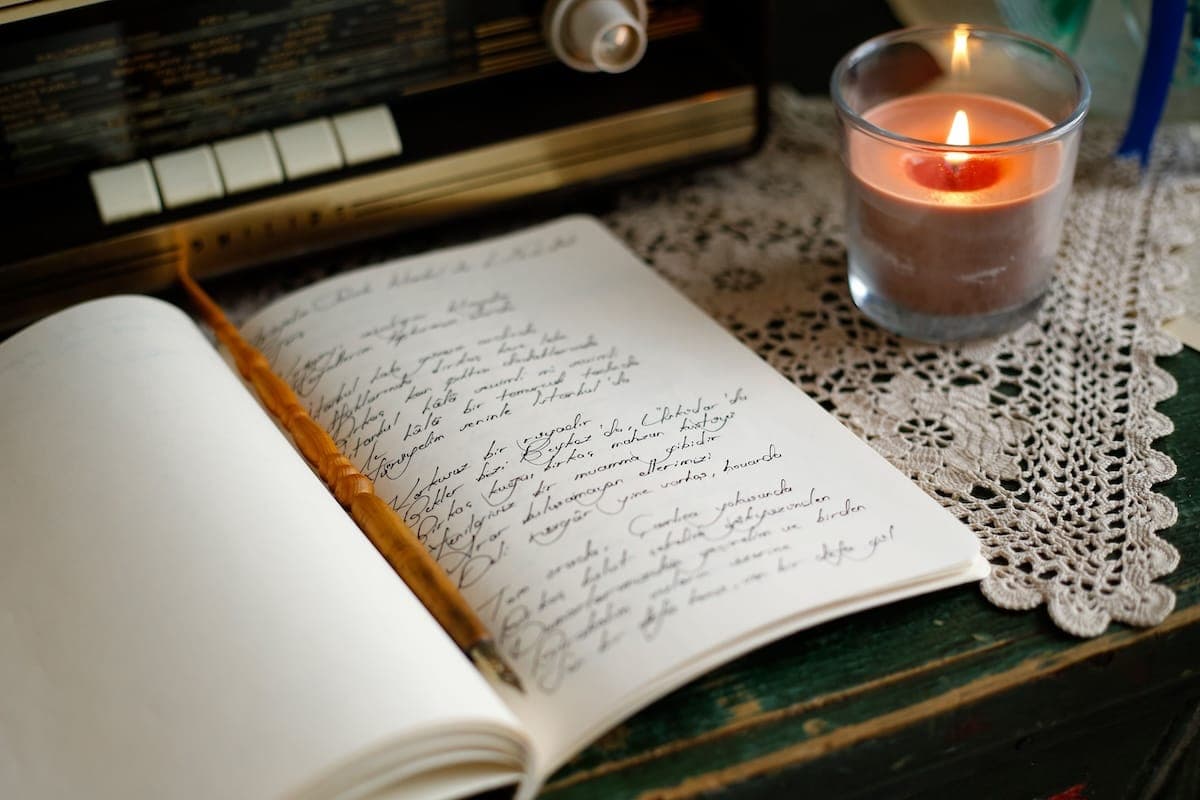
A handful of sentences can hold a lifetime of feeling. We explore how writing micro-memoirs can help us reflect on the past, embrace complexity, and reconnect with our authentic selves
“Good girls prove their virtue by getting rid of themselves.”
These ten words feature in a memoir called Mean written by Myriam Gurbani. They spoke to me so loudly that I had to write them down and save them for later. Although I didn’t grow up as a queer, mixed-race Chicana living in southern California, Myriam’s story mirrored my own experience of abandoning parts of myself for survival.
That’s the power of language: 10 words strung together in exactly the right order can take you from feeling totally alone to feeling connected to a complete stranger who somehow understands your inner world.
As a writer, I’m always curious about how to build that bridge with readers. But what I’ve come to realise recently is that writing can, first and foremost, bridge the connection with ourselves.
Of course, writing a 200-page memoir takes time that many of us simply don’t have. But what if there was another way to share your personal story? Enter: the micro-memoir.
What is a micro-memoir?
I first discovered the micro-memoir when reading the work of Beth Ann Fennelly, who writes poetry, essays, and even a collaborative novel. I was captivated by the precision of her work, with both of her micro-memoir collections featuring chapters that can span a single line or a handful of pages.
Beth Ann says: “I see now that experimentation with different genres throughout my career was preparing me for creating what I’ve termed the micro-memoir. A hybrid form with multiple literary parents, the micro-memoir combines the lyrical concision of poetry, the narrative tension of fiction, and the truth-telling of creative non-fiction.”
As a reader, the micro-memoir is easily digestible and very entertaining. But what about the writer? What do we stand to gain?
“We tend to think that understanding how we’re feeling is completely natural and intuitive, but I believe it’s actually hard work to understand how we feel and why,” Beth Ann says. “Some of that hard work can be done through the art of memoir, in which we look back at our lives, see patterns, and trace what experiences and people made us who we are today.”

Finding the wisdom in your story
Flipping through her recent collection of micro-memoirs, The Irish Goodbye, it feels more intimate than a traditional memoir, like I’m sneaking a look at the author’s private diary entries. But as Beth Ann explains: “The journal entry rarely undergoes revision, rarely rises to the level of art, and is sometimes concluded before enough reflection has been achieved.”
And I think it’s the editorial agency that micro-memoirs allow – the chance to reflect on our lives and reframe things, omit the parts that don’t matter, summarise into a singular story or statement – that makes the concept an accessible way for us to gain some therapeutic value from writing.
While autobiographical writing might feel like an archaeological dig for an unchangeable artefact, micro-memoir is more malleable than that.
“It’s commonly understood that we can revise our writing. Less commonly understood is that we can revise our thinking,” says Beth Ann.
“We can return to events from our past armed with a genuine curiosity and a refusal to accept received wisdom or apply artificial intelligence or the filter that captures us in the best light. We can learn what these events have to tell us.”
Reshaping the stories we tell
The mental health impact of storytelling has long been noted by academics and researchers. The concept of ‘narrative identity’ is a key part of wellbeing, and is constructed through the stories we tell about ourselves, as well as the stories that are told about us by others.
Growing up, we can fall prey to the narratives placed upon us, such as the ‘good girl’ quote I shared with you earlier. But with micro-memoir we get a chance to redefine ourselves on the page.
As the author of one paper, published in Current Directions in Psychological Science, writes: “Narrative identity reconstructs the autobiographical past and imagines the future in such a way as to provide a person’s life with some degree of unity, purpose, and meaning.
“Through narrative identity, people convey to themselves, and to others, who they are now, how they came to be, and where they think their lives may be going in the future.” In that way, we take back control of our narrative to change how we exist in the world.
But writing a memoir shouldn’t be about crafting a ‘palatable’ identity for consumption. According to Beth Ann, it’s less about performing and more about exploring the nuances of being human.
“We are so used to packaging ourselves as better than we are, cropping and filtering and Photoshopping our weaknesses. This instinct carries over into our lives, in which we’ve internalised the idea that it’s shameful to experience ugly emotions like envy, or vanity, or spite.”
The takeaway? Being human is messy. We all contain contradictions, and when we hide them, we deny ourselves the chance to reclaim who we are in our entirety. By shaping your experiences into a micro-memoir, you don’t just make sense of your own story – you may help someone else make sense of theirs, too.
Start small: You don’t need to tell the story of your whole life. Begin with one moment, memory, object, exchange, or image.
Slow down: Micro-memoir asks us to pause and look closely. What did you notice? What did you hear, smell, feel, or avoid feeling? Narrow the lens and let the details do the work.
Look for the emotional truth: Rather than trying to make yourself look good, ask: what was really happening here? Were there conflicting feelings – tenderness and resentment, grief and humour, shame and love?
Shape it into a story: A micro-memoir may be brief, but it should still feel complete. Think of it as a tiny narrative with movement: something shifts or becomes clearer.
Leave things out: Part of the power of the form is omission. You don’t have to explain everything. Choose the details that carry the most meaning.
Revise: Memoir gives us the chance to return to past experiences with curiosity. As you edit the piece, notice whether your understanding of the memory changes, too. This is where the therapeutic value lies.
Beth Ann Fennelly, is an award-winning author, poet, and teacher based in Mississippi. Her latest book ‘The Irish Goodbye: Micro-Memoirs’ is available now.



Find a professional today
Try our guided search tool, we can connect you with over 20,000 professionals.