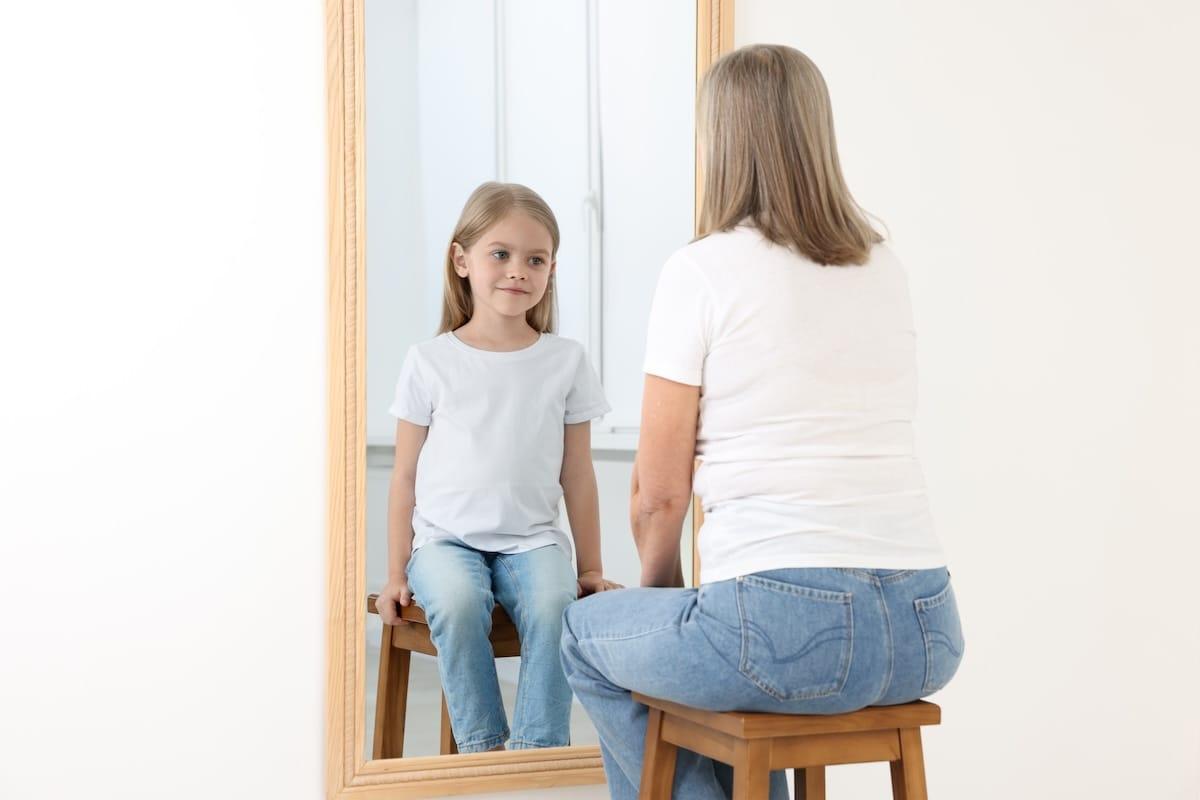
The ‘clever one’, the ‘shy one’, the ‘chatty one’. Labels, however well-intentioned, can sometimes box us in. But what if we could turn them into opportunities for growth?
I was the ‘academic one’, and my sister was the ‘sporty one’. The labelling wasn’t ill-meant from our parents. It was perhaps even an attempt to bolster our confidence in the area where they saw we had natural ability. However, the labels stuck, as they are designed to. When we would see family and friends, I would be asked about my studies, and my sister about her sports matches.
Emily Hanlon, who blogs under the name of the Playful Psychologist, writes that adults often give labels to “act as a bridge between our expectations and reality”. She uses the example of ‘shyness’. If a child doesn’t act the way an adult (or society) expects them to around other people, their behaviour is often explained away out of embarrassment as shyness. An example might be a child not wanting to hug a relative that they don’t know, or to talk to someone they haven’t met before. She writes that the label can often stick even though it was inaccurate right from the start. “These words simplify the situation for us, but fail to honour the child’s unique developmental needs and experiences,” she explains.
My label wasn’t damaging to me, but it felt limiting. All these years later, I wonder if I didn’t explore other areas in which I could have excelled – or even just had fun – as they didn’t fit what I was told I was: bookish and studious. But what if the label had been derogatory or cruel? How many children were told that they were troublemakers, difficult, stroppy, bossy, or stupid – and how many of those people still feel the sting of those labels as adults?
The journey to take power away from the negative labels and turn the positive labels into seeds for growth starts with taking stock of them and then thinking about the impact they have had on you. Educational and child psychologist Dr Michele McDowell says that putting distance between yourself and the label is key here. You can take “I am a failure” and change it to “I was told I was a failure in the past”. She explains: “It’s a small shift in language that can begin to change a fixed view about who you are into something that happened to you, which is easier to move away from.”
With time, you can also explore who gave you the label and perhaps whether it says more about them, and their insecurities, than it does about you. As a teen, I was argumentative, especially when a topic came up that I felt passionate about. Others were quick to label me bossy and fiery, and I became stereotyped. My whole personality was reduced to one or two adjectives, which some people viewed as negative traits. I was made to feel that I should tone myself down to fit in, and I eventually started to believe that I should change my behaviour or lose my social circle.
With the benefit of time and space, I can see that these labels speak volumes about expectations of how girls should behave all those decades ago. They also point to the reality that there were boys and men around me who didn’t like my vociferousness. I didn’t change myself, and it was a struggle, but years later, I did find friends at university who enjoyed a debate as much as I did.
For me, this was a reclaiming. I chose to take those labels and be proud of them. But some labels are like barbs. They have sunk deep. Chef and author Nick Jaye now travels to schools to talk about his dyslexia, which was recognised when he was 61 years old. His school days were difficult. He shares: “My label was ‘stupid’, and along with this, I was stuck at the back of the classroom from junior school until I left.” He remembers written work that had taken him hours being scored through; being told he wasn’t reading fast enough and being repeatedly labelled if he didn’t understand what he had read. He was being judged on a metric that could only result in failure.
Jaye admits that he began to believe the label given to him at school, which Dr McDowell says is sadly commonplace. She explains: “Labels heard and reinforced over time can become core beliefs that research has indicated can be difficult to shift.” She adds that she has seen labels become self-fulfilling prophecies: “I have witnessed first-hand the impact that this can have on a child’s development. The ‘shy one’ becomes the adult who will never put herself forward; or the ‘naughty one’ is more closely monitored and behaviours are recognised more. Over time, he begins to believe that this is simply who he is.”
Jaye admits that this prolonged verbal abuse did impact his confidence. It was succeeding in his career, which helped him rewrite the narrative that others had forced upon him – something he discussed in his first TEDx talk. He never gave up at school, despite the labelling and knock-backs, but in his career – first as an estate agent and then as a chef – his efforts were met with recognition. This gave him a boost of confidence and positivity. He adds, though: “Sometimes the stigma of that ‘stupid’ label still haunts me.”
In moments of doubt, this is totally understandable. After all, if you remove a thorn, it still leaves a small wound. Rewriting the narrative by questioning those labels and finding new adjectives is a process that requires strength and patience. Returning to the “shy label”, Dr McDowell says: “Once you begin to question that label, for example by speaking up or perhaps putting yourself forward in a way you wouldn’t have before, you are gradually building a new pattern of behaviour and a new belief.”
For me, the most powerful tool has been quietly noting all of the many times in my life when I have shown the negative labels to be untrue. While Jaye says he never felt the need to prove those who labelled him wrong, he has done so with every book he has published and every child he has helped.
We can also use the labelling to celebrate how complex we are. Yes, I am bookish, argumentative, and bossy sometimes, but I would also add the adjectives curious, assertive, decisive, and determined. And sometimes I am none of those things. Some of the labels I have been given don’t reflect my personality or abilities at all. They are just what someone else has decided I am in one moment – reducing me, as those teachers did to Jaye, to one word. However, some of the labels have some truth and nod to strengths I can use to grow. After all, that is how we give labels real weight – by consciously rejecting the ones that don’t serve us, reclaiming those that do, and choosing a whole new descriptive vocabulary every day that really reflects how we are ever-changing and ever-growing.

Find a professional today
Try our guided search tool, we can connect you with over 20,000 professionals.