You’re invited to step inside the intuitive, euphoric world of ecstatic dance
I’m at The Bath House in Hackney Wick, London, where the ecstatic dance DJ invites us to partner with whoever is next to us. I turn, barefoot on the wood floor. A woman with honey-coloured, tousled hair smiles warmly, excitedly, extending her arms as if to say: “It’s you, you’re here”, though we’ve never met. No talking is one of the rules and boundaries of ecstatic dance, so communication happens through facial expressions, energy, and body language.
We begin to gently mirror one another, reaching up, fingertips not quite touching. The music is rhythmic, without lyrics. We touch our hands together, both welcoming and open. Gently turning in the dance, I now have my back to her, and we move as one. She traces her hands from my wrists to my underarms as I lean slightly into her body. She rests her head in the nook of my neck as the DJ invites us to thank this partner and move on. The spell breaks. We hug, smile, and I don’t encounter her again, not during the two hours of dancing or afterwards. Perhaps I conjured her?
I’m curious to discover the place where dance intersects with wellbeing. I’ve always found dancing fun and playful, from ceilidhs to sticky indie dancefloors. More recently, dancing feels like healing, therapeutic, and personal. Less of an outward show and more about curiosity. I wonder about the limitations and possibilities of my body, ways to deepen my presence, how it feels to dance to music I dislike; or take grief, rage, or fear, to the dancefloor; to bring feelings or habits I want to let go of, and offer them there.
Fallen Angels
I give my friend, Professor Wendy Dossett, a call. She’s a trustee of Fallen Angels Dance Theatre, and currently in recovery from addiction herself.
“I went to a performance and I actually couldn’t stop crying.“Because, without words, and with their bodies, these people told my story,” she explains.
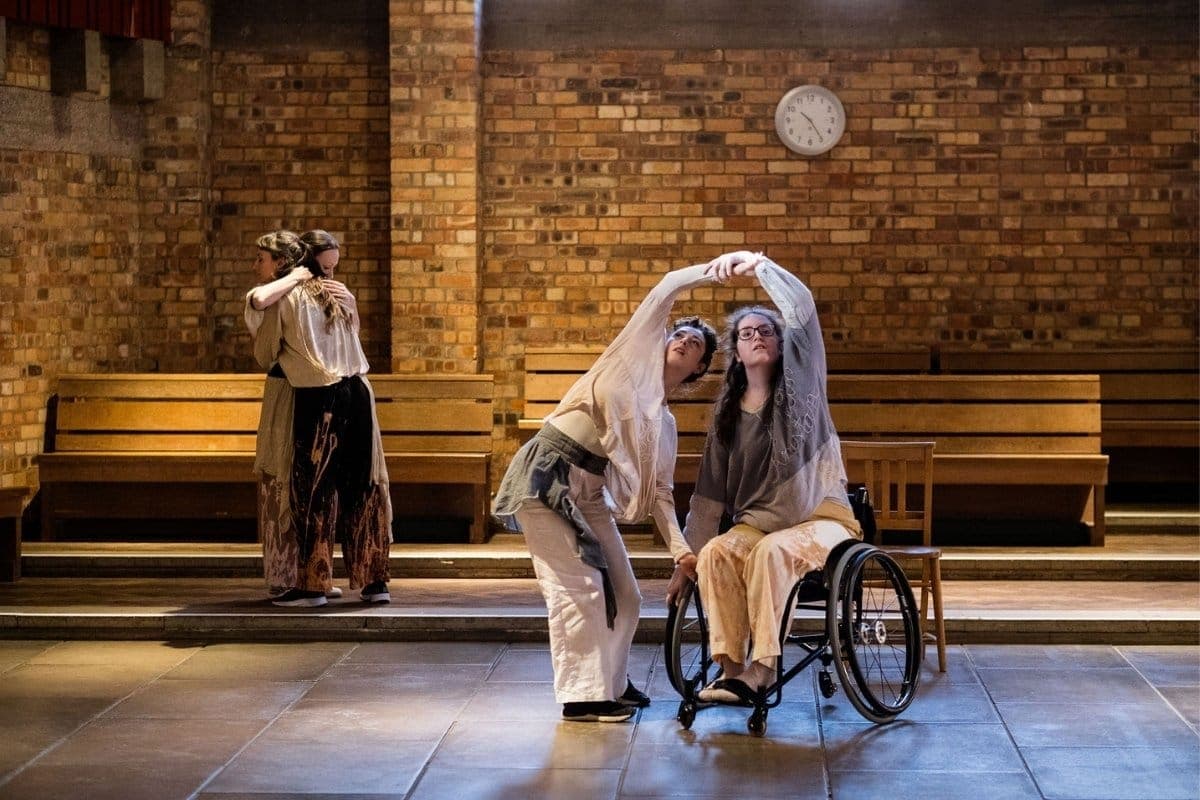
Wendy tells me more about the company and charity, which offers movement practice and dance to people in recovery from addiction, mental ill-health, and adversity. I learn that it was co-founded by Claire Morris and Paul Bayes Kitcher – a former soloist for the Birmingham Royal Ballet, intent on using his own addiction recovery experience to transform the lives of others.
“It’s ambitious,” Wendy admits. “Offering the chance for people in recovery to perform alongside professional dancers on these famous stages.”
Wendy and I met on a writing course at the Tŷ Newydd centre in north Wales. We’d talked plenty, but this conversation about the body and movement is where we really open up, as she describes her experience with Fallen Angels.
“I’ve gone to groups, with other people in recovery,” says Wendy. “Doing that work of contacting where in the body do I feel that misery or frustration, and how would I move if I wanted to show what recovery means to me.”
We talk about shame, and I feel it in my own throat, stuck there, sending heat down through my chest, and up into my face, like lava. I imagine dancing as lava and the sort of rhythm and movement that might invite.
Dance Lab
I drive from my home in Hay-on-Wye to Cardiff on a scorching day, keen for more embodied experiences. Tucked away inside the Wales Millennium Centre, Dance House is a cool space in every sense of the word. There, I meet Billy Maxwell Taylor. He’s hosting a “Dance Lab” day supported by Arts Council of Wales funding and National Dance Company Wales.
Curating spaciousness is important to Billy: he keeps reminding us to breathe, and every time he does so I realise I’m unconsciously holding my breath. I’m here for a meditative class for dance artists and researchers, and an immersive and intimate performance of Billy’s newest piece, together with his fellow dancer Liam Wallace.
I was unprepared for how deep, moving and, at times, hilarious this experience would be. At one point I stand, still and silent, as a young professional dancer (who I’ve only just met) improvises a new piece in response to receiving my touch: interpreting how it just felt to have my hands laid gently on her head, shoulders, arms, back, and legs.
I can hardly breathe, not wanting to miss a split second of this new one-off personal response. She is dancing with her eyes closed. She choreographs herself in the moment to gentle ambient music. Which feels like poetry to me.
In contrast, I can barely catch my breath for laughing in the group work exercise. We’re improvising the wildest scenes together when a full-on heavy metal track unexpectedly appears on the playlist. We go with it. Together, we’re trying to answer a question that a group member posed, by using our bodies.
Some of the groups choose to mingle, and I get curious about the unspoken rules my team are playing by: keeping to ourselves and not infiltrating what we perceive to be other people’s dance space.
Yes, boundaries are important, but what could “dancing” with another group look like in other life situations? Why do I assume I have to stick to my own lane so often? Dancing is asking and answering so many questions that I’ve not thought about with words. I want to make it part of my regular conversation, with myself at least.
To close the day, we are both audience and participants for Billy and Liam’s preview performance of ‘The Poetics of Hands Meeting’. It’s magical and moving, and I experience a strong sense of camaraderie with these strangers. It feels like using our bodies to communicate fast-tracks us to a shared understanding, acceptance, and connection.
I’m certain that dance helps my wellbeing, not just physically, but my mental health, too: I feel accepted in these spaces, held and cherished. And as a mid-life, queer woman going through perimenopause, it’s a much-needed balm.
On my return to Hay-on-Wye, I’m eager to move my body more. I sign up for a silent disco at the town’s Treehouse café – to dance barefoot in the early morning, on the banks of the river, alive with its iridescent dragonflies, swifts, and kingfishers. I feel so ready.

Find a professional today
Try our guided search tool, we can connect you with over 20,000 professionals.