Join Ellie House as she visits Springhill Community Garden, Aberdeen, and gets to the heart of what these spaces offer our wellbeing and happiness
There is the faint hum of traffic as Pam Nwelih softly traces the petal of a lupin, lost in thought as she admires the proud fanfare of lilac spires. She’s not alone in her love for this cottage garden bloom, and points in delight as several bees make their way from flower to flower with a determined buzz.
“This is the white-tailed bumblebee; I’ve got a fascination with bees at the moment,” she says with a chuckle, before threading her way through the garden. A handful of volunteers are hard at work in the sunshine, for Springhill Community Garden will not take care of itself. From a wildlife pond heaving with tadpoles to flourishing raised beds and even medicinal plants – there’s something rather special about this glorious patchwork of green.
Once an abandoned bowling green left to grow wild, Springhill Community Garden can be found on the outskirts of Aberdeen. The area is considered to be one of the most deprived in the once oil-rich Granite City, yet a determined team has enabled the garden to flourish. The project has been a true labour of love over the last seven years, as volunteers have navigated funding applications alongside vandalism. Having put their faith in nature, their vision has firmly come to fruition, and local schools now visit as part of work experience.
Whoever you are, and no matter what you may be faced with, the garden offers a brief yet beautiful moment of respite from everyday life. This is certainly the belief of Pam, who runs wellness-in-the-garden sessions on site. From cyanotype printing to some good old-fashioned weeding, she’s hopeful that even 30 minutes of what she terms “therapeutic gardening” could impact people’s mental health for the better.

“Therapeutic gardening is a huge passion of mine, possibly because I adored nature from a very young age,” says Pam. “If I think back to when I was around four years old, I can remember visiting my grandad’s garden in Northern Ireland. I was in absolute awe at the process of germination; I still am. The concept that a seed can turn into a tree – how incredible is that? Or the fact that plants have the ability to turn to the sun; there are so many elements which are just wonderful.”
It is perhaps no surprise that Pam first set out as a marine biologist, and her remarkable career even took her to Borneo. She then retrained as an engineer, but spending time in the garden has always served as a soothing balm for the trials and tribulations of life.
“I juggle my day job with volunteering for One Seed Forward.
“Here we encourage people to grow their own food and run community garden courses,” says Pam. “In the past I have been a mental health outdoor practitioner, and I was involved in a social prescribing project. At the very heart of therapeutic gardening, and indeed the sessions I run here at Springhill, is the belief that nature will always be there for us if we take the time to tune in.
“From a personal perspective, I am the parent of a child with additional support needs. I have learnt from experience that you cannot run on empty. It is in those moments that I find myself outside; being in the garden makes me realise that there is a much bigger picture. It’s a reminder that I am part of a bigger tapestry; when I’m gardening, I find my way back to a state of mindful flow. My brain stops whirling, and I focus on the present; this is what I try to bring to sessions.”
Pam tailors each and every session to those attending, whether that be young families or individuals who prefer solo activities. Recent offerings have included cyanotype printing and learning about the resident bees, as well as taking time to notice the array of colours on display. Herbs also feature, with rosemary famed for stimulating all the senses.
Participants have recently been encouraged to create a nature mandala, which involves gathering natural materials before arranging them in a circle – complete with a central point.
“I try to make the sessions feel relaxed with some gentle learning, but it really depends on who comes along,” explains Pam. “The majority of participants have been families, some of whom may be in the process of diagnosis. They really appreciate having this time in the garden; it’s very rare that we take a moment to just be because of all the background noise.
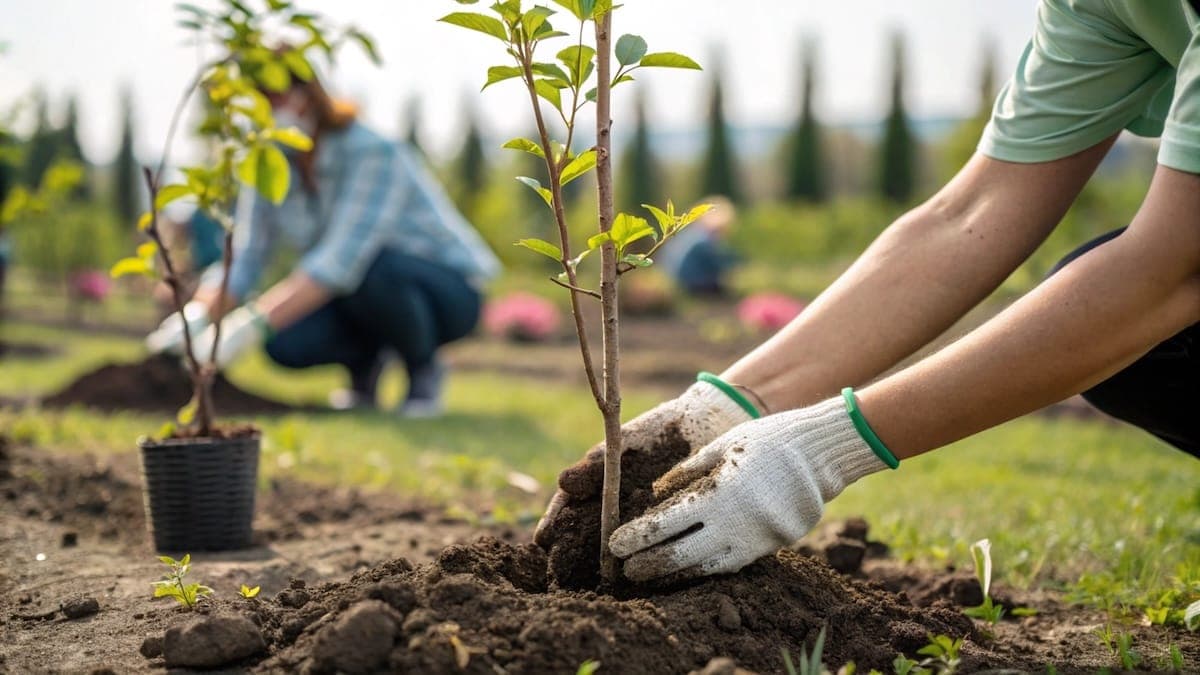
“Sessions can also be physical, so many studies have shown that physical activity in nature can lower stress, anxiety, and depression. Humans, as a species, tend to like being in nature; I always feel a sense of calm, and my heart rate relaxes. We all have different skills, and sometimes people are much happier getting to work on some weeding. The feeling that you are helping can give such a sense of achievement.”
The sessions have also enabled Pam to bring people together who might not otherwise have met, as well as reminding her of the important things in life.
“It’s about social connection; when we come together in nature it’s the most beautiful reminder that we are all just winging it at life,” she says. “I try to meet people where they’re at, with activities that are relevant and meaningful to them. There is no one-size-fits-all for wellness sessions, and nature will forever remind me to be grateful for the little things.
“I had a very good friend who sadly passed away from breast cancer; she really loved gardening,” Pam says. “She would video call me when she was well enough so she could see what I was up to in the garden, or she’d sometimes manage to sit outside. She would pay attention to the smallest of details, right down to a thick blanket of clover.
“It struck me how she noticed things that the majority of us would rush past; she was able to reach that point of mindfulness just by spending time in the garden.”
Outside of Springhill, Pam has taken her mindful mission to communities across north-east Scotland, from care homes to young parent support groups. She’s hopeful that as word spreads, nature can help people bloom, one session at a time. “You don’t have to be good with plants for plants to be good for you,” says Pam. “It’s possible to grow joy; a garden really can give so many possibilities.”



Find a professional today
Try our guided search tool, we can connect you with over 20,000 professionals.