How the folk revival is connecting us with what matters
updated on Jul 10, 2026
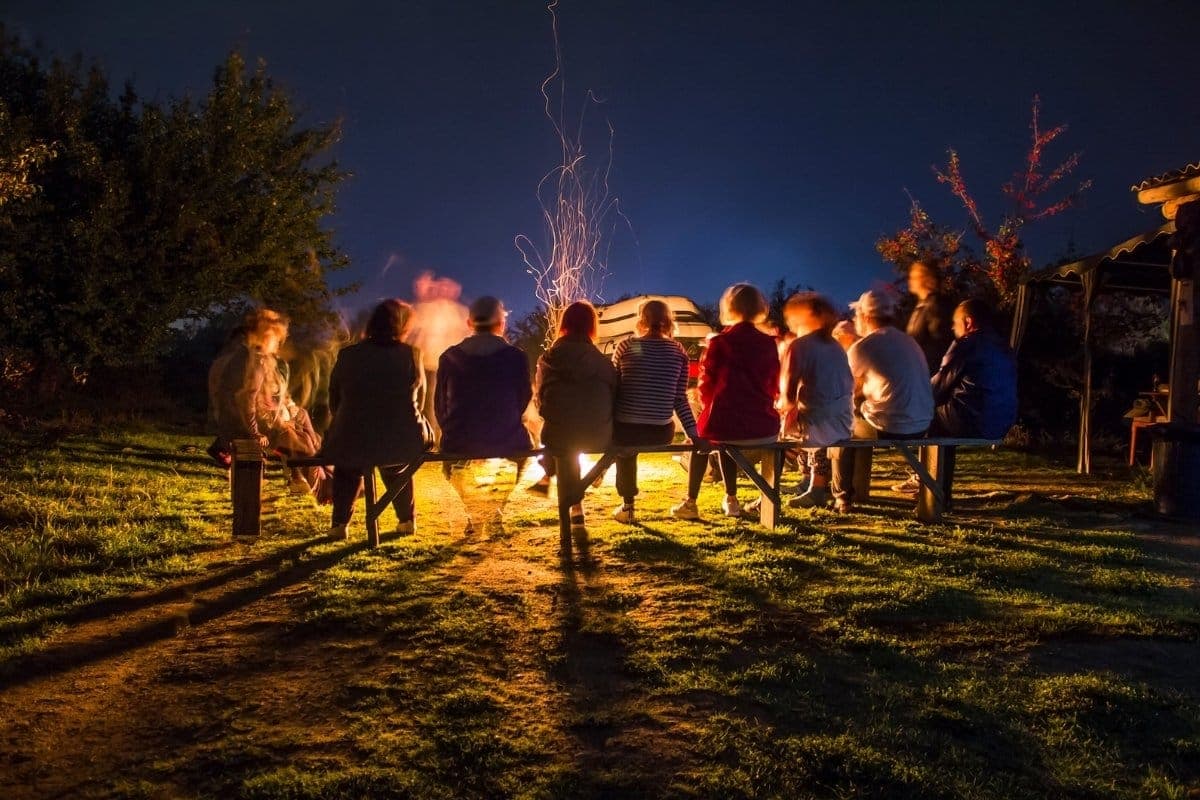
Join Katie Scott as she goes on the immersive musical experience Singing with Nightingales, and discovers how the folk revival is nurturing our wellbeing in wonderful ways
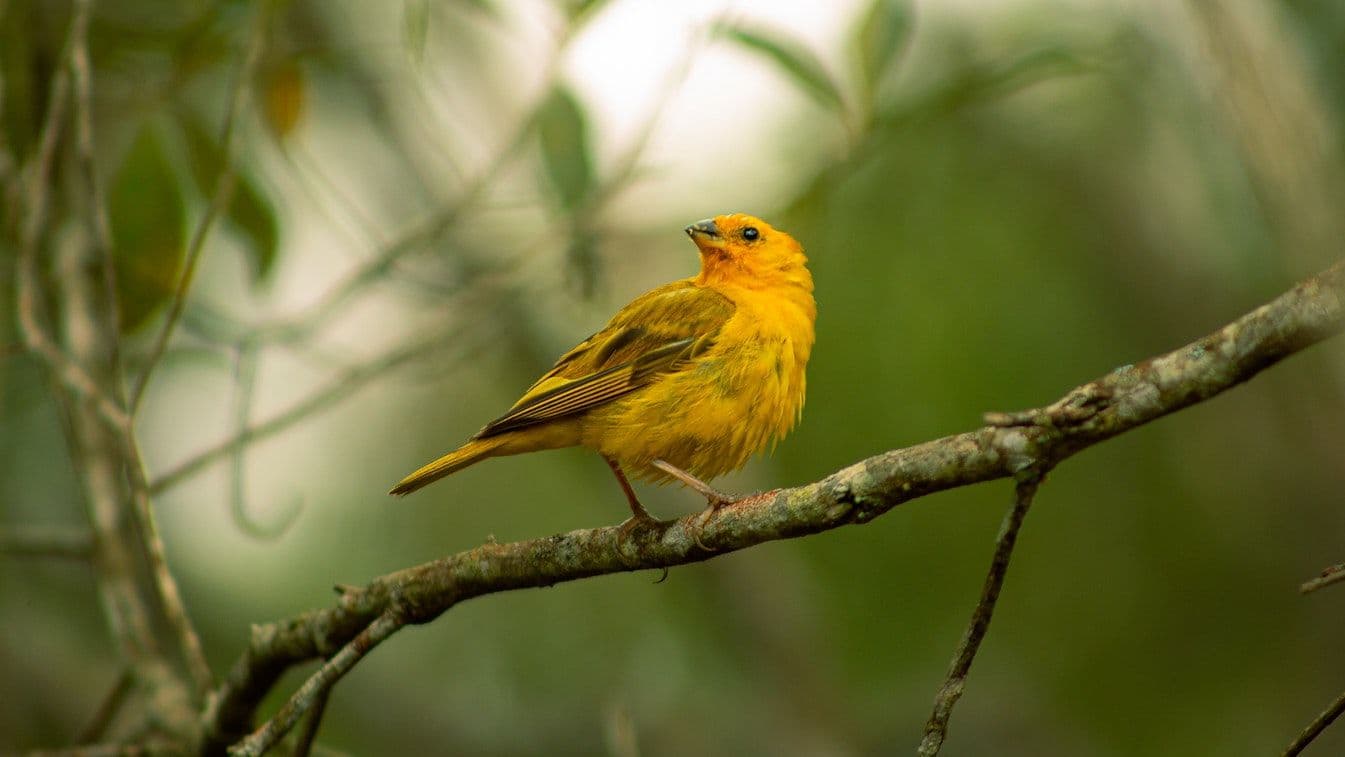
We were walking in silence under the stars when the bird song first reached me. The notes were clear. Some sounded melancholy – a call for a lost love – while others were jubilant trills. We walked on out of the woods and along the edge of a ploughed field, my toes slipping a little in my boots so as not to stumble on the troughs and ridges of hardened earth. The song grew louder as we approached the thicket: a nightingale sang from the Sussex shrub after its extraordinary journey from Sub-Saharan Africa.
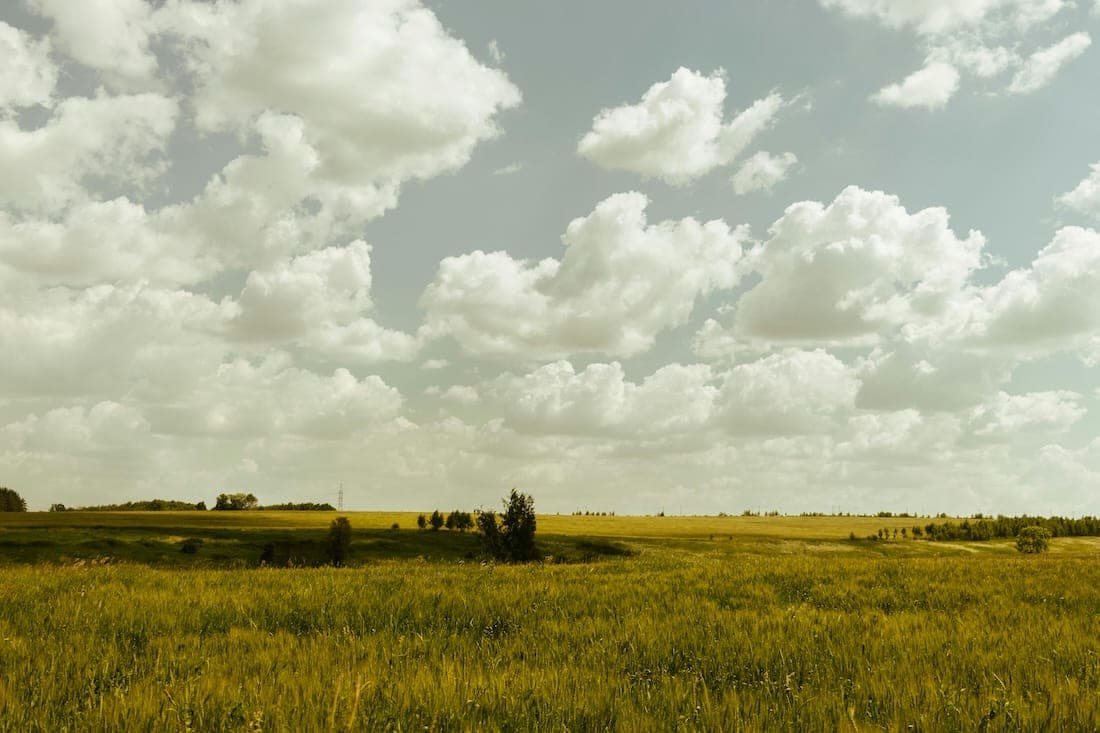
We sat down and continued to listen as the wind fitfully moved across the field. Folk singers Sam Lee and Mira Awad faced each other, their silhouettes outlined in front of the trees, and then they gently sang to, and with, the nightingale. Human voices melded with the avian melody.
An event like this feels needed and necessary. In the UK, perhaps because of climate and political uncertainty, a growing number of people are looking to spend more meaningful time in nature. A study published in the journal Earth last year revealed that people’s connection to nature in the UK has declined by more than 60% in the last 200 years. The figure could be even more acute in other countries, and has no doubt been accelerated by the pace of our digital lives.
This has coincided with, or even prompted, a revival of folk music. People are searching for authenticity in these times of instability and craving a connection to nature because they are feeling untethered. As Sam says: “We are drowning in information, shocking statistics, and images of catastrophe. We are also missing moments in which we can fall in love with nature. These are moments of awe – I call them ‘aweprints’ – which stay with us in life and give us back a sense of the reason we are on Earth.”
Mercury Prize winner Sam travels the country to collect and then record songs from our past, as well as his own works. These songs share wisdom about living in tune with the natural world, and he often records didactic stories for posterity, including tales of woe of those who went against the natural cycle of life.
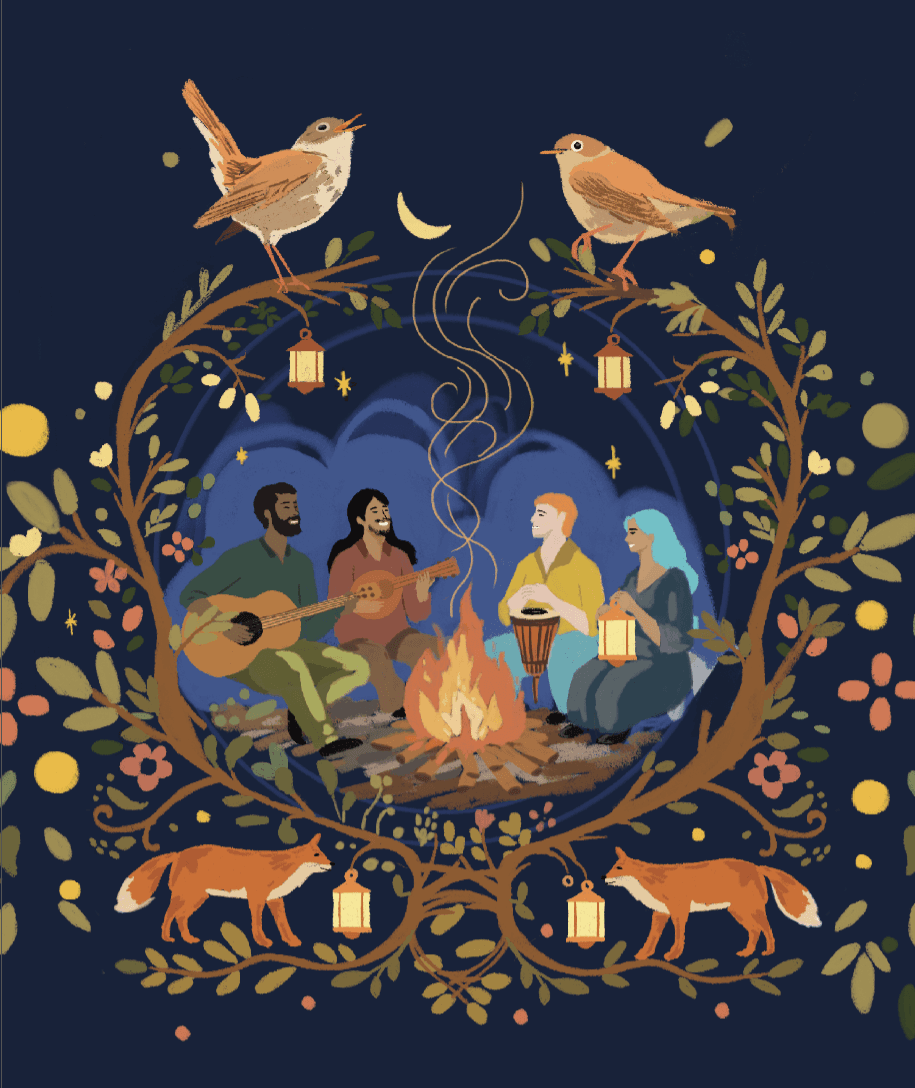
He also hosts Singing With Nightingales, the musical experience where participants are invited to witness musical performances by the campfire, a tour of the woods, songs, and folklore. This is the 11th year that Sam has sung around this campfire and shared his knowledge of the nightingale before leading people into the night to hear its song. The experience is deeply immersive and felt differently by every participant. He shares: “We help people get deeper and deeper into the land, and experience holding a space that is sacred and rich in ritual.”
Seasoned broadcaster, Matthew Bannister, agrees that rituals – and specifically a yearning for the many that we have lost – is an impetus in bringing people to folk music and singing in and about nature. He says, “People are missing the rituals that connect them to the seasons, and that’s really what folklore practices do. They’re rooted in the particular time of year, whether dancing around a maypole on May Day, some kind of pagan solstice symbolism, or the winter fire rituals.
“These connect them back to the world that they live in when they are feeling totally divorced from it by the digital alienation of screens. People are coming back to nature because they care about the environment and the planet, but it grounds them, too. They’re coming back to folk music because it comes somehow out of the landscape.”
This is what his podcast Folk on Foot captures. Sussex-based Matthew takes folk artists into a landscape that has inspired their work and records them singing there. Sam was one of the very first artists that he connected with when the seeds were first being sown of what has now become an award-winning and long-running series.
Back to my evening with the nightingales, before we ate around the campfire, Sam took us to a small clearing where we could hear the dusk chorus. When we first stopped, there was little bird song, but after a few minutes, perhaps when they realised we were not a threat, they started to sing.
During the season, the participants will change each evening, as will the background tracks, whether the bark of a muntjac deer or the steady patter of rain. As Matthew shares, “The whole way in which you experience music is transformed by being in nature. You might hear on our podcast the river burbling past. You definitely always hear birdsong of some kind or another.”
He adds that this can also impact the interviews, as they then become more reactive and less formal. He explains: “The fact of being in nature means that the conversation is not linear, so we respond to what is going on around us. Animals, birds, sights, or the terrain take us in new directions in the conversation. You have a totally different tone and style to the conversation, specifically because you are in the outdoor world.”
Perhaps this also speaks as to why folk music is gaining followers. Songs celebrate cycles, which people lived by and relied upon, but they also speak of nature’s fickleness. Nature can be both permanent and impermanent; as solid as an oak and as fleeting as bird song on a breeze. In the same way, folk songs can be passed down through generations, but they can also be created in a second and then lost, as the notes sung in that dark field in Sussex, which will never be replicated. This is both comforting and exciting to listeners. They become part of something age-old and something momentary at the same time.

As we walked from the thicket, a fire in a brazier glowed in the distance. We all huddled around, and Sam asked us to share our thoughts. People spoke of the emotional impact of the experience. One lady who had worked in nature recovery for decades was struck by the sadness. She described her feeling as akin to that of visiting a friend in a hospice, knowing that they might not be here for long. Others, in contrast, spoke of their profound joy.
I continued to listen with one ear, but then quietly slipped back from the circle towards a woodpile where I could hear a rustling sound. My ears were still attuned to every tiny whisper of the wind in the still-bare branches and movement among the grasses. I looked to the stars and the clouds racing across the sky. And all the while, the song of the nightingale querulously reached me in peaks and troughs as the winds picked up again and blew it towards and then away from me.
While this was potentially a once-in-a-lifetime experience for me, others have sung about it for centuries. The nightingale’s call marked the coming of a fresh season and the promise of new life. As a new wave of folk artists share their songs, I only hope that the nightingale continues to figure, despite the awful reality of their dropping numbers. These new songs and re-imaginings of ancient tunes might spread awareness of their demise. We can hope that as people look to folksong to reconnect with nature, their appreciation of nature’s own diverse and achingly beautiful music will also increase as will their drive to protect it.
I slept that night smelling of bonfire and with music dancing as colours in my head – a Palestinian song all about belonging; Sam’s melodies still floating softly above the drone of an Indian shruti box; but above all else, the crystal clarity of the nightingale’s song as he called out for a mate into the darkness above.



Find a professional today
Try our guided search tool, we can connect you with over 20,000 professionals.