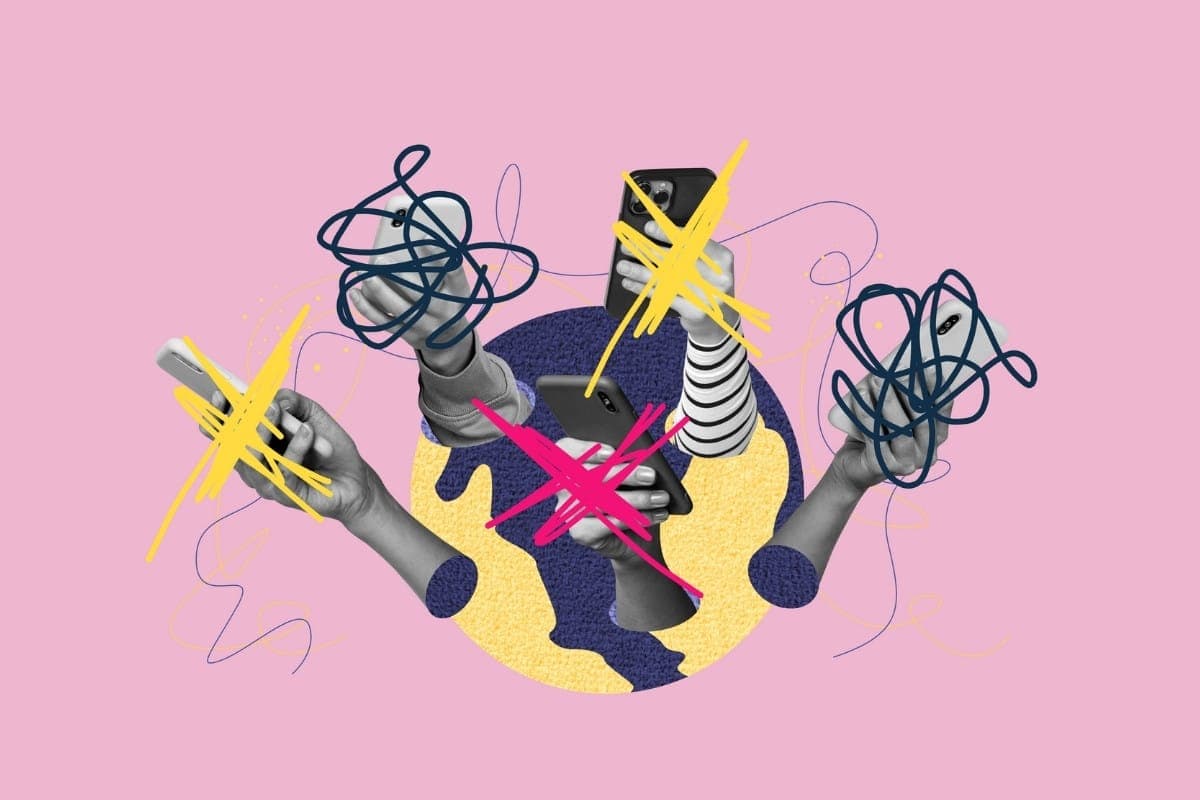
The rise of technology comes with a lot of perks, but it can also remove some of the everyday challenges that keep us thinking. ‘Friction-maxxing’ puts a little of it back – and your mind might thank you for it
We live in an age of frictionless convenience: food at the door, texts in seconds, entertainment on tap. But what are the consequences of this kind of ease?
Most of us have heard of the idea that balance is key, and as psychotherapist Hannah Mackenzie explains: “If every desire we have is immediately gratified, it can stunt our emotional development.” However, she warns that if we push ourselves too hard, we may also become completely overwhelmed.
‘Friction-maxxing’ is the wellness idea encouraging us to opt back into a little bit of everyday effort. Think: leaving your headphones at home on your walk or swapping the social media scroll for jotting down some thoughts in your journal.
It might sound like, well, a lot of effort, but gradually, you may come to recognise that small amounts of boredom or frustration aren’t as unbearable as they first seem. They can even be rich opportunities for imagination and creativity.
“We can withstand more than we might think,” Hannah adds. “We might even impress ourselves with our own capabilities.”
So, here are four simple ways to give your brain the resistance it needs to feel sharper, calmer, and more present.
1. Do it yourself
Modern life can feel stressful and relentless, so this isn’t about adding to the long list of things we ‘should’ do; it’s about allowing ourselves the pleasure of a job well done. According to Hannah, one easy way to try this is to put together a piece of flatpack furniture. You’re following step-by-step instructions, making mistakes, getting frustrated, and, most importantly, trying again. This is the kind of problem-solving and critical thinking that modern convenience can often take away from us.
If flatpack feels like a stretch, start smaller: paint a wall yourself, hang one of your favourite pictures, or stitch that button back on your jacket. Hannah explains that these small acts build our tolerance for frustration and teach us that difficulty is survivable, which, over time, strengthens our ability to face bigger challenges.

2. Walk this way
Want a friction fix that doubles as exercise and earns a few environmentally friendly bonus points? Leave the car at home a couple of days a week. If you can, walk to work, do the school run on foot, or stroll to collect that takeaway you ordered; try taking that small convenience out of the equation. Without the ease of a car journey, you create space for your thoughts to surface, for your mind to wander and for creativity to arrive.
According to Dr Emily Crosby, child and educational psychologist, it’s not about making everything feel difficult. Taking a gradual approach helps develop a growth mindset, increasing your overall sense of competence and supporting your mental health in the process.
3. Try something new
An easy and fun way to add a little friction into your life is to become a beginner again. Is there a hobby you’ve always wanted to try, or a promotion, or a volunteering role you’ve been putting off applying for? Putting yourself in new situations and taking on opportunities that feel a little uncomfortable can be a surprisingly effective way to challenge yourself.
“Getting comfortable with being uncomfortable can be really beneficial for mental health – this is where growth happens,” says Dr Crosby. When we navigate unfamiliar territory, we learn that we can overcome difficulties, which builds resilience over time. So whether you thrive or stumble, these small moments act as a kind of brain training for your mental wellbeing.
4. Use it or lose it
Modern inventions can certainly make life easier, but easier doesn’t always mean better. A recent study by researchers at MIT Media Lab raised questions about what might happen when we rely on AI to do our thinking for us. In the small study, participants who used ChatGPT to write essays showed lower brain connectivity and were less able to recall what they had written than those who worked without digital assistance. It’s an early finding, but a useful reminder that convenience doesn’t always need to replace thinking for ourselves.
So, before you ask AI to draft that email or create a shopping list, consider how long it would actually take you to write it yourself. And, rather than Google that recipe, could you find one in the cookbook that’s collecting dust on your shelf?
According to Hannah, you’re aiming for just the right amount of challenge. “Start with something simple, rather than suddenly throwing away all your technology and running off to live in the woods.”



Find a professional today
Try our guided search tool, we can connect you with over 20,000 professionals.